Your boiler sits quietly in a kitchen cupboard, airing cupboard, or tucked away in the loft. Day in, day out, it works hard to keep you warm in the winter and supply hot water year-round, often unnoticed until it stops working.
But what if we thought about your boiler like we do a car?
Is Your Boiler Older Than Your Car?
Estimate
Average Lifespan 10-15 Years (You’re near the upper limit)
Annual Runtime 1,000-2,000 hours, depending on your usage & climate
Total Runtime at 15 years 15,000 – 30,000 miles
Miles Equivalent 1 hour = ‘’1 Boiler Mile’’ (15,000 – 30,000 Miles)
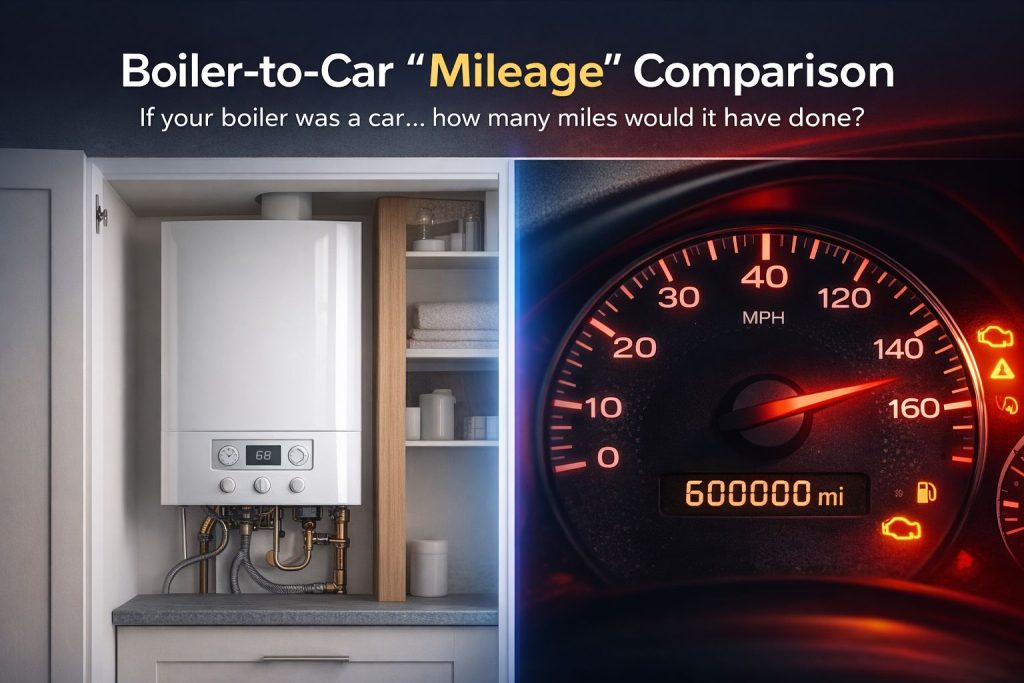
The Car Analogy If we compare your boiler to a car running at an average of 40 mph
- 15,000 hours × 40 mph = 600,000 miles
- 30,000 hours × 40 mph = 1.2 million miles
That’s right your 15-year-old boiler has done the equivalent of driving to the moon and back… twice.

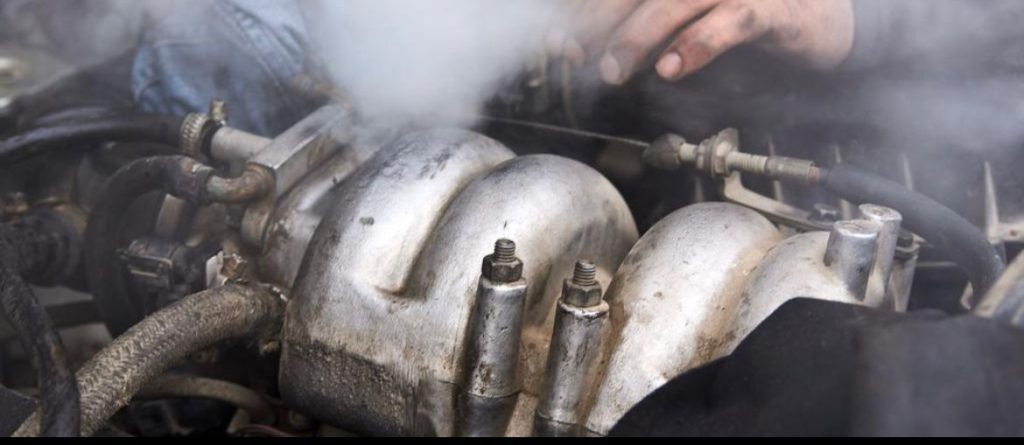
A car with 600,000 miles on the clock would be falling apart by now, creaky suspension, worn engine, and a cloud of smoke following it. So, what do you think your boiler is doing?
Why This Matters (Even If It’s Just for Fun)
This comparison isn’t about saying boilers are bad or cars are better. It simply helps visualise how much energy our homes use.
We often think about fuel costs when filling up the car. But because gas arrives invisibly through a pipe, we don’t always think about how much we’re using to heat our homes.
Seeing your annual gas usage as “miles driven” makes it more relatable.
So next time you glance at your thermostat, you might wonder:
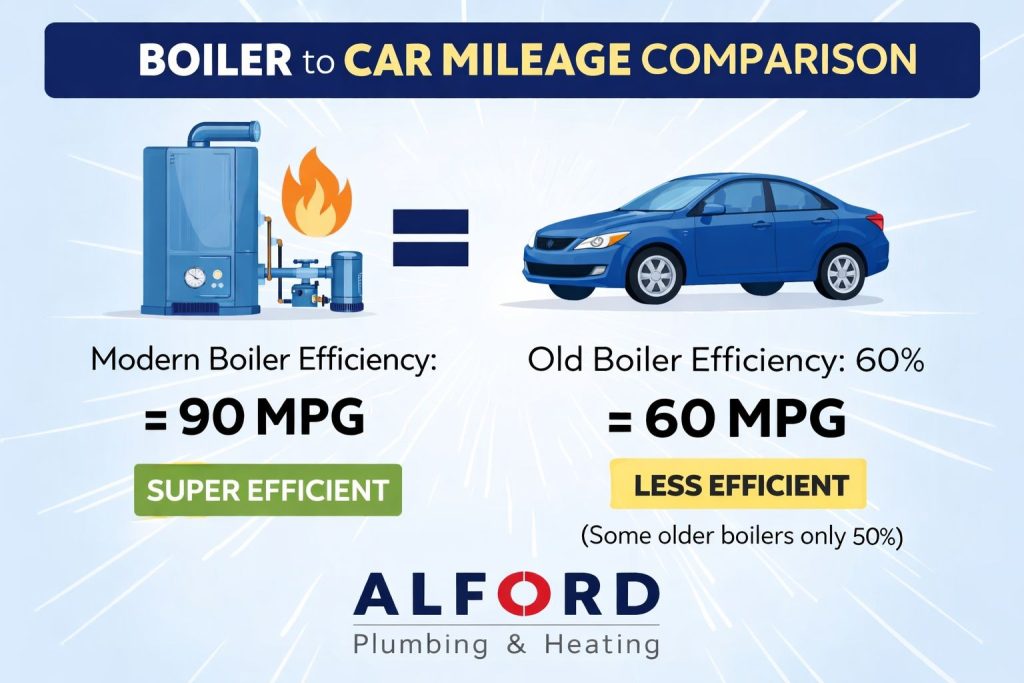
If my boiler had an MPG rating would I be impressed?
Energy is energy whether it’s moving wheels down the M1 or keeping your living room warm on a cold January evening.
⚠️ What You Should Be Concerned About
For a 15-year-old gas boiler:
- Efficiency Loss: Originally 80–90%, now possibly down to 60–70%.
- Higher Risk of Breakdowns: Worn parts, tired heat exchangers, and pressure issues.
- Safety Risks: Older boilers are more prone to leaks, especially carbon monoxide.
- Outdated Technology: No smart controls, poorer modulation, and higher emissions.
- Costly Repairs: Parts may be obsolete, and emergency call-outs add up.
🛠️ Time to Replace?
- Modern condensing boilers are quieter, safer, up to 95% efficient, and compatible with smart thermostats and zoning controls. Replacing your aging boiler now can save money on energy bills and give you peace of mind through winter.
This comparison is just for fun!